




British Values
At Fiddlers Lane Primary School, we understand the importance of preparing our pupils for life in modern Britain and promoting the values that play a key role in 21st‑century British society.
British Values are woven throughout our curriculum and are a central focus in our assemblies. We encourage all pupils to show respect and understanding towards people of different faiths, backgrounds and cultures. Children learn that while individuals may hold a variety of views about what is right and wrong, everyone is expected to follow the law.
Our aim is to broaden pupils’ understanding of the world around them so they can make informed and thoughtful choices. Through PSHE, RE and other curriculum subjects, children take part in regular discussions and debates that help them develop their ideas and opinions. E‑safety learning also supports pupils in making sensible decisions to help keep themselves safe online.
The Fundamental British Values are:
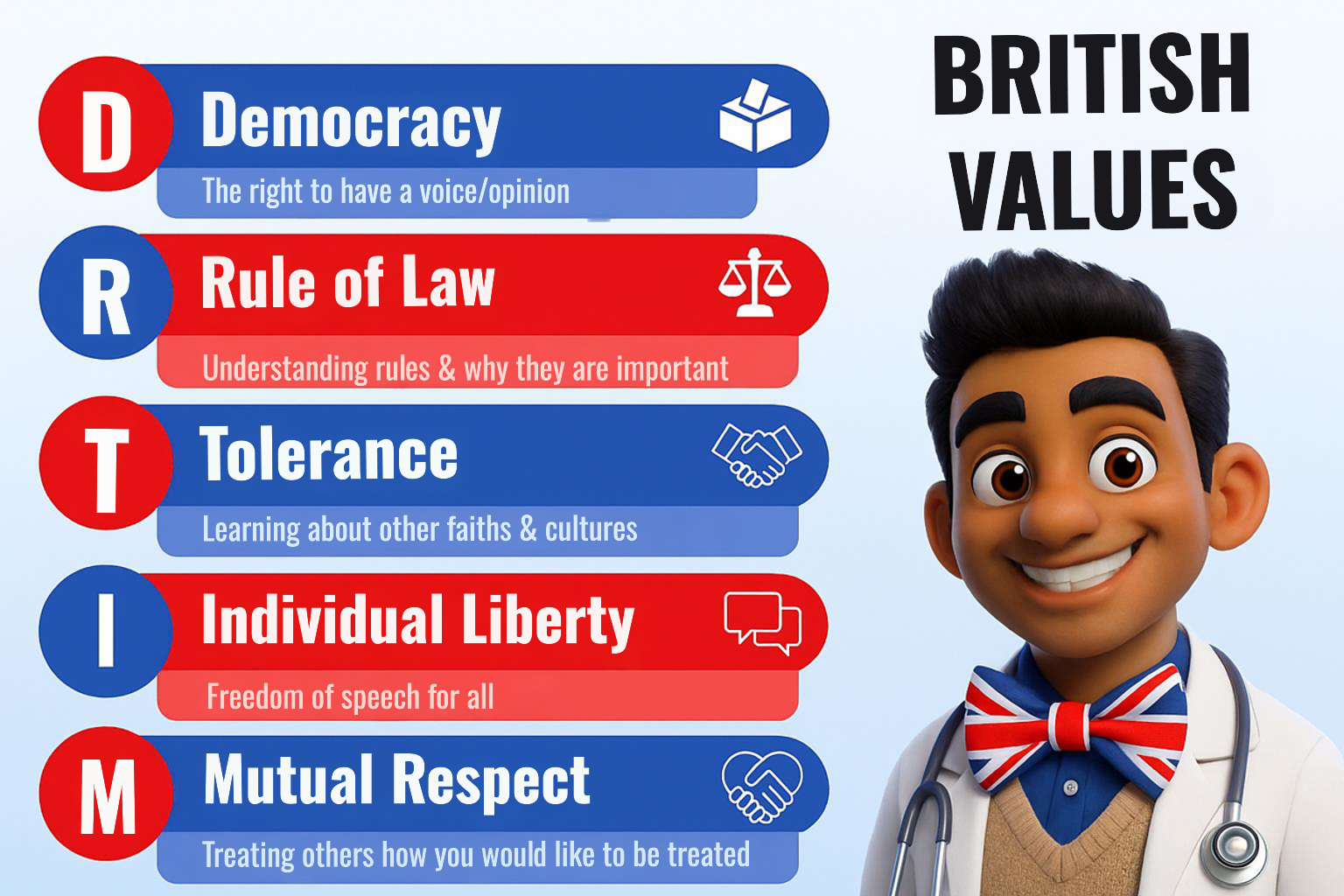
Through our teaching of the Fundamental British Values, we want to children to develop:
- an understanding of how citizens can influence decision-making through the democratic process
- an understanding that the freedom to hold other faiths and beliefs is protected in law
- an acceptance that people having different faiths or beliefs to oneself (or having none) should be accepted and tolerated, and should not be the cause of prejudicial or discriminatory behaviour
- an understanding of the importance of identifying and combatting discrimination
What does ‘Democracy’ mean to us at Fiddlers Lane?
At Fiddlers Lane Primary School, we see democracy as a way of life built on freedom, equality and shared responsibility. It means that everyone understands their rights, their responsibilities, and the importance of having an equal voice. Rather than decisions being made by one person alone, democracy allows individuals to contribute, express their views and take part in shaping their community.
We believe that children, just like adults, should have opportunities for their voices to be heard and to play an active role in school life. Because of this, we promote democratic values throughout our school so that pupils learn:
- That their ideas, opinions and thoughts matter, and that the school listens to them
- That listening to others, showing respect and considering different viewpoints is essential
- That everyone has the right to express their opinion and be treated with respect
- That personal and social responsibility is an important part of everyday life
Through these experiences, children develop confidence in speaking up, understanding others, and becoming thoughtful, active members of their community.
What does ‘Rule of Law’ mean to us at Fiddlers Lane?
At Fiddlers Lane Primary School, we understand the Rule of Law as the set of rules, guidelines and expectations that help create a safe, fair and orderly society. These rules- whether set by the government, the community, schools, workplaces, or families- exist to protect people, prevent harm and ensure everyone can live and learn in a secure environment.
We place great value on having clear boundaries and consistent expectations in school, as well as following national laws. These help to ensure that Fiddlers Lane remains a calm, positive and safe place for all members of our school community.
We recognise that for rules and laws to be meaningful, children must be taught positive and respectful behaviours. Working closely with parents and carers, we help pupils understand why rules matter and to think carefully about the consequences of breaking them or making unhelpful choices.
We teach and promote the Rule of Law so that pupils learn:
- That rules and laws help to keep everyone safe, treated fairly and supported to behave responsibly
- That rules and laws form the foundation of our justice system
- That every person has rights which should be protected and respected
- That everyone has a responsibility to follow rules and uphold the law
Through this, pupils develop a strong understanding of fairness, responsibility and respect skills that support them both in school and in their wider lives.
What does ‘ Tolerance of Different Faiths and Beliefs’ mean to us at Fiddlers Lane?
Tolerance at Fiddlers Lane means appreciating and accepting that people hold different beliefs, traditions and viewpoints. We help pupils understand that diversity is something to be embraced and that differences enrich our community. Through exploring a range of cultures, religions and worldviews, pupils learn that it is important to challenge stereotypes, reject prejudice and stand against any form of discriminatory behaviour. We aim to nurture open‑minded, compassionate learners who feel equipped to live confidently and harmoniously in a diverse and modern society.
What does 'Individual Liberty' mean at Fiddlers Lane?
Individual liberty refers to the right to think, act and express oneself freely, while respecting and protecting the rights of others. At Fiddlers Lane, we place great importance on celebrating the individuality of both children and adults. We encourage pupils to express themselves confidently and creatively, recognising the unique strengths, personalities and perspectives each child brings to our school community.
Every child is valued as an individual, and we strive to create an environment where their ideas, beliefs and talents can shine. Our staff take pride in knowing the children well and celebrating their gifts not only within the classroom but across the whole school.
We promote individual liberty throughout school by teaching children that:
- Everyone is special and unique, regardless of their differences.
- Diversity is something to celebrate and embrace.
- It is important to express ourselves freely and confidently.
- Sharing our beliefs, ideas and opinions is valued and respected, without judgement.
- Positive risk taking is encouraged, helping children grow in independence and resilience.
What does 'Mutual Respect' mean at Fiddlers Lane?
At Fiddlers Lane, mutual respect means recognising the inherent value and dignity of every individual. We teach pupils to treat others with kindness, fairness and consideration, understanding that positive relationships are built on respectful behaviour and communication. Our staff model these behaviours every day, demonstrating how respectful interactions help create a supportive and inclusive school community. Through our curriculum and daily routines, pupils learn that everyone deserves to be listened to, valued and treated with understanding, regardless of their background or personal characteristics.
Equality & Diversity
The Equality Act 2010 combined nine separate pieces of legislation into one single Act simplifying the law and strengthening it in important ways to help tackle discrimination and inequality.
The Act introduced 9 protected characteristics;
- Age
- Disability
- Gender reassignment
- Marriage and civil partnership
- Race
- Religion and belief
- Sex
- Sexual orientation
- Pregnancy and maternity
As a school we do not prejudice and are fully inclusive and supportive of our whole learning community.